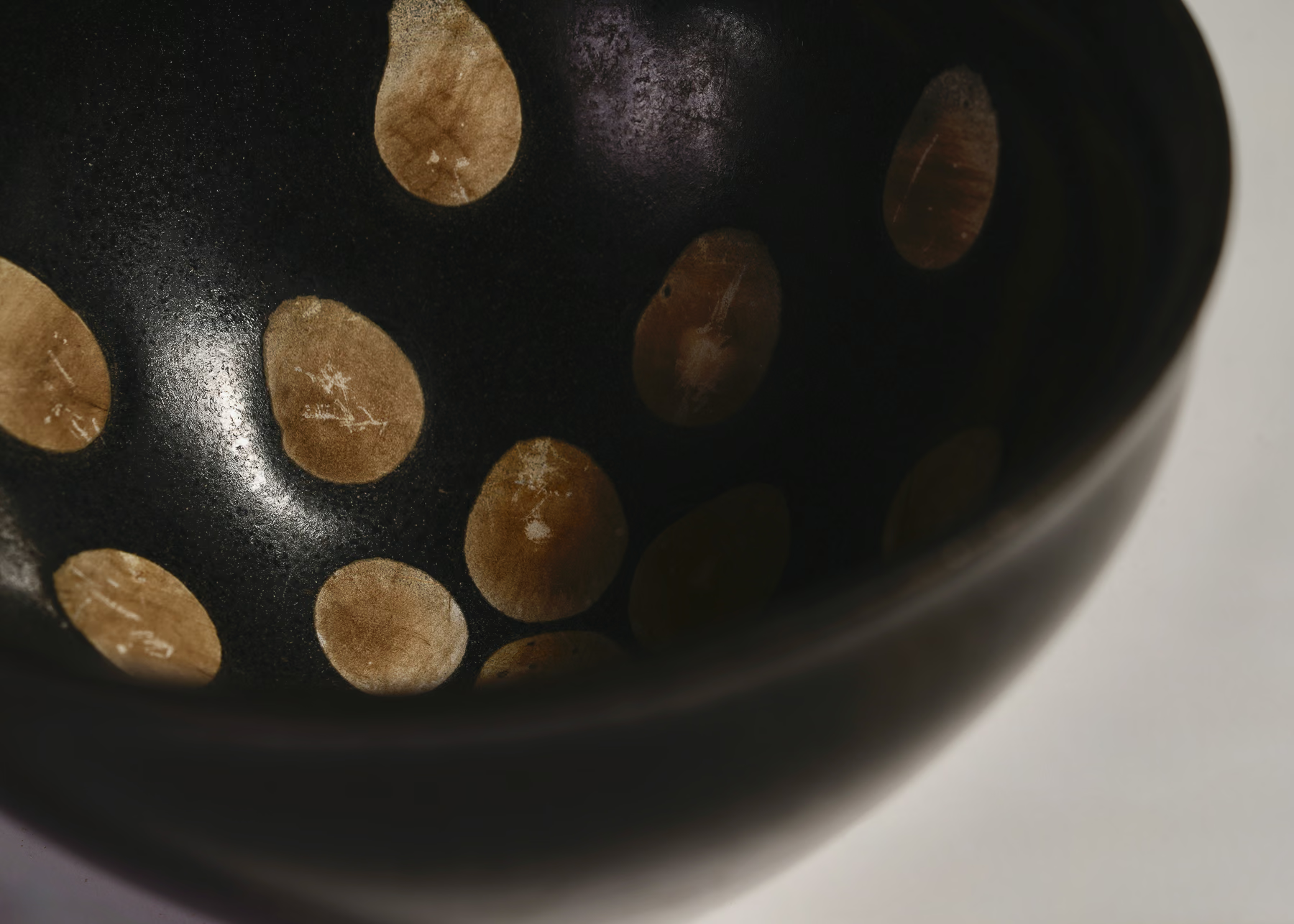
Jizhou kilns, Jiangxi province
Black-glazed bowl with contrasting plumage-like markings
Height 13 cm; Diameter 7.5 cm
This refined bowl exemplifies the “partridge-feather” (zhègū ban) style of Jizhou ware. Its lustrous black glaze is enlivened by pale oval spots resembling the plumage of a partridge. The decoration creates a rhythmic, organic pattern that reflects Song aesthetics of natural beauty. Such bowls were treasured in tea culture, where dark glazes enhanced the color of whisked tea. The compact form rises from a neatly cut foot, its unglazed base exposing the pale body. Each vessel was unique, as the firing process produced variations in the markings. Partridge-feather bowls contrast with Jian ware, famed for “hare’s fur” and “oil-spot” effects. They embody the inventive spirit of the Jizhou kilns in exploring novel decorative methods. Comparable examples survive in Japanese temple collections and major museums worldwide.
This piece conveys the Song dynasty ideal of harmony between craftsmanship and nature.
In Song dynasty art and poetry, the partridge (zhègū) held symbolic resonance that enriches the appreciation of the so-called “partridge-feather” (zhègū ban) bowls produced at the Jizhou kilns.
For Song artists and tea drinkers, the partridge symbolized a union of modest beauty, natural elegance, and poetic imagination — qualities perfectly echoed in the decoration of Jizhou “partridge-feather” bowls.
This striking tea bowl exemplifies the “partridge-feather” (zhègū ban, 鷓鴣斑) decoration developed at the Jizhou kilns of Jiangxi province during the Southern Song dynasty. The bowl rises from a neatly cut foot, left unglazed to reveal the pale clay body, while the interior and exterior are covered in a lustrous black glaze enlivened with irregular pale oval spots. These contrasting markings were likened to the mottled plumage of a partridge, a bird celebrated in Song poetry and painting for its modest beauty and symbolic associations of humility, natural elegance, and harmony.
The base bears the single character yin (印, “seal”), impressed during production rather than added later. Marks of this type are rare on Jizhou wares, and its presence here may indicate a workshop or kiln identifier, or serve as an auspicious emblem signifying authenticity and authority. Together with the decorative scheme, this detail enhances the vessel’s rarity and cultural resonance.
In the context of tea culture, the pale “plumage” spots set against a dark glaze visually echoed the froth of whisked tea, elevating the bowl beyond utility into the realm of poetic metaphor. Each vessel was unique, as the application of slips and firing variations produced unrepeatable patterns, perfectly embodying the Song aesthetic of spontaneity and natural beauty.
“Partridge-feather” bowls occupy a distinctive place within the inventive repertoire of the Jizhou kilns, alongside paper-cut and leaf-decoration techniques. Jian ware bowls, by contrast, achieved their “hare’s fur” and “oil-spot” effects through glaze crystallization, whereas Jizhou potters deliberately manipulated surface decoration using contrasting slips or resist methods.
Smaller bowls of this type, generally 7–10 cm in diameter, are preserved in Japanese temple treasuries, where they were highly valued in the Zen tea tradition. The present example, at 13 cm high and comparatively slender, stands apart in its proportions, suggesting a special commission or less common form within the type.
The attribution of “partridge-feather” bowls to the Jizhou kilns is supported by archaeological finds in Jiangxi province. Earlier publications sometimes grouped them under the general label “black wares of Jiangxi,” but typological features — thin body, slightly everted rim, and obliquely cut foot — confirm their Southern Song origin.
While Jian bowls occasionally display impressed marks, Jizhou examples bearing single characters are exceptionally rare. The yin (印) mark on this piece is integral to its manufacture, not a later collector’s addition, making it an especially valuable example for understanding workshop practices. Its presence suggests that certain Jizhou potters may have employed identifying or auspicious marks, a feature that enriches the scholarly appreciation of this ware.
This bowl should be attributed to the Jizhou kilns of Jiangxi province, Southern Song dynasty (1127–1279). Its decoration epitomizes the “partridge-feather” style, while its tall form, distinctive glaze pattern, and rare impressed yin mark distinguish it as an especially refined and significant example. It encapsulates the technical ingenuity of Jizhou potters and the Song dynasty’s fascination with uniting craftsmanship, natural imagery, and symbolic meaning in the context of tea culture.