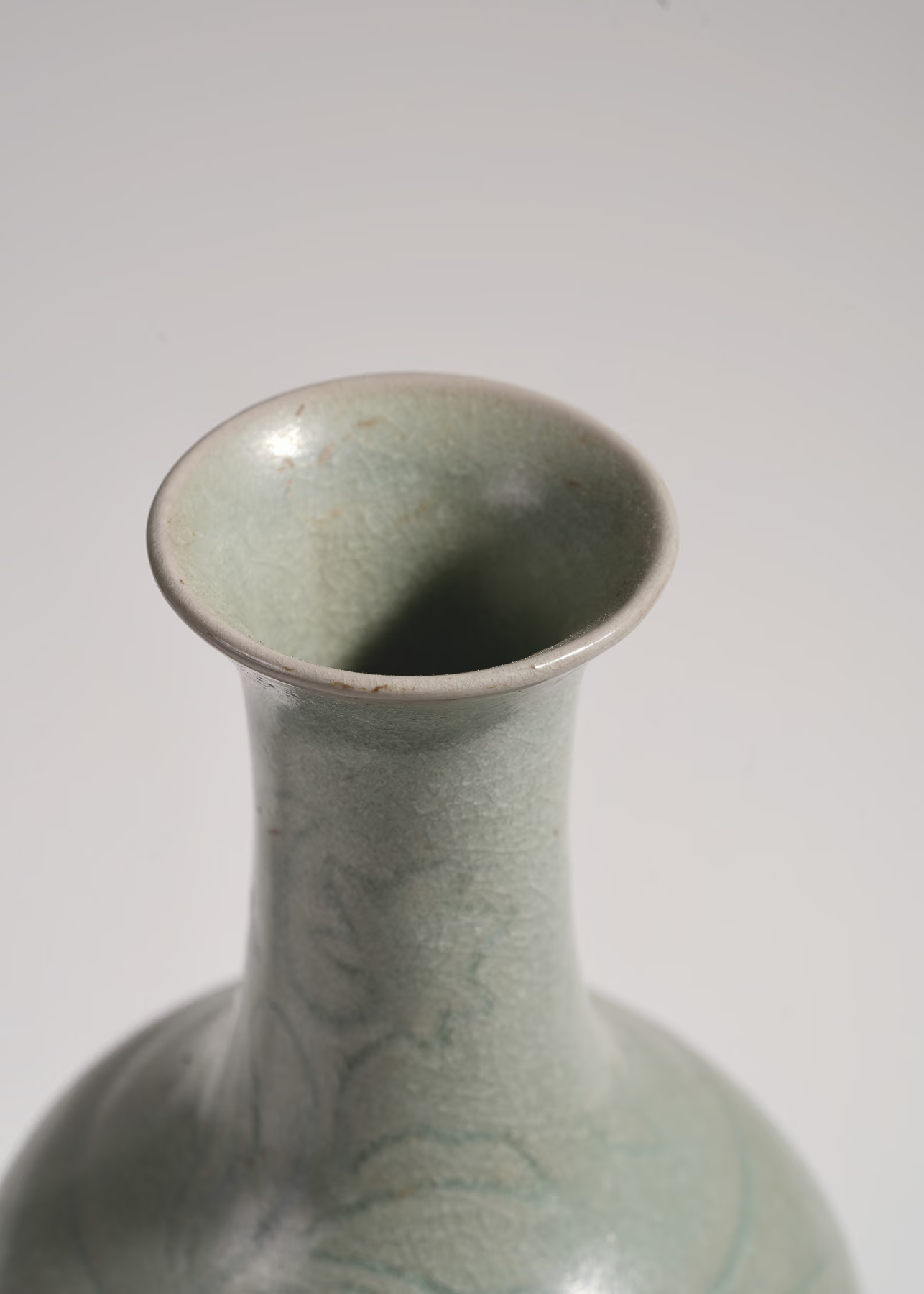
Height: 19.5 cm; Width: 11 cm; Mouth diameter: 5.5 cm
This rare vase exemplifies the refinement of Ru-type wares, celebrated for their “celestial blue” glaze, a hue likened to the sky clearing after rain. The slender “goose-neck” form reflects the elegant aesthetic favored by scholar-officials of the Song dynasty.
A delicate network of fine crackles — the so-called “ice-crack” or “fish-scale” pattern — enriches the luminous glaze, once seen as a flaw but later prized as natural ornament. Subtle lotus scrolls are incised beneath the glaze, an exceptional feature, since most Ru wares rely solely on their glaze for beauty.
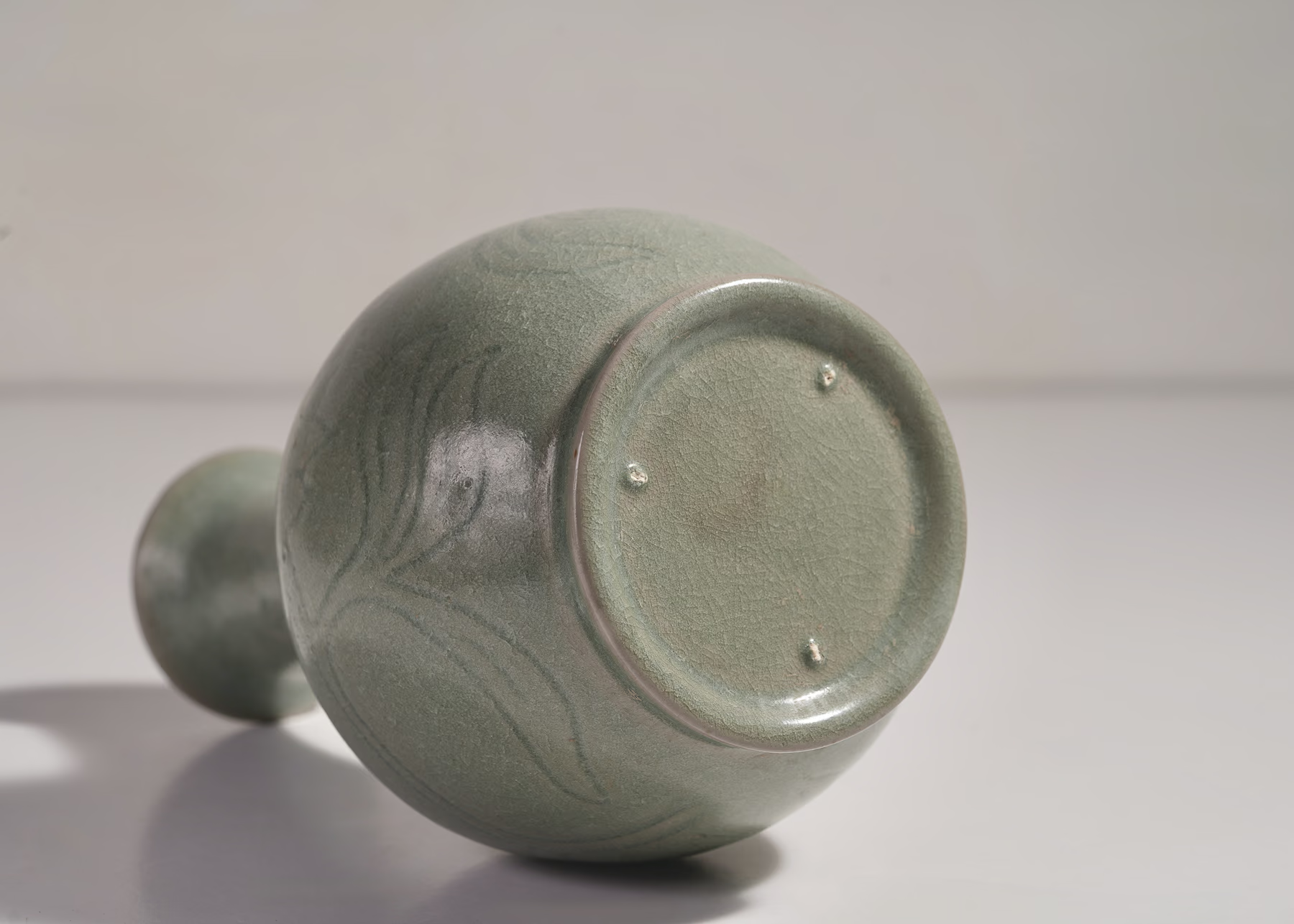
The vessel was fired on fine pin supports, leaving minute “sesame seed” spur marks on the base, evidence of full-glaze firing techniques perfected at Ru kilns.
Combining purity of form, poetic glaze color, and rare engraved decoration, this vase embodies the Song ideal of harmony between human artistry and the natural world.
Origin
The hallmark of Ru ware, the “celestial blue” glaze is said to have been inspired by a dream of Emperor Huizong (r. 1101–1125). According to legend, he envisioned the sky breaking open after rain, its fresh clarity suffused with light. On awakening, he ordered artisans to recreate this hue in porcelain.
Characteristics
The glaze presents a soft, jade-like surface of pale blue, enriched by subtle depth and inner glow. Minute crackles (ice-cracks) often traverse the surface, resembling cicada wings or fish scales, adding to its refined beauty.
Cultural Meaning
For Song literati, the “celestial blue” glaze symbolized purity, serenity, and harmony between human craftsmanship and the natural order (tian ren he yi 天人合一). Its restrained elegance exemplified the Song aesthetic of understatement and contemplation.
Rarity and Legacy
Only a small number of Ru wares survive today, making them the rarest among the Five Great Kilns of the Song dynasty. Their celestial blue glaze is considered one of the most beautiful achievements in the history of Chinese ceramics, treasured as much for its poetic associations as for its technical brilliance.
This elegant goose-neck vase, with its slender neck rising gracefully from a rounded body and flaring slightly at the rim, epitomizes the refinement of Ru-type wares of the Northern Song dynasty. Its form, evocative of the elegant curve of a goose’s neck, was admired for its balance, purity, and literati grace. The surface is enveloped in a luminous “celestial blue” glaze, a hue celebrated in tradition as inspired by Emperor Huizong’s vision of the sky clearing after rain.
The glaze, smooth and jade-like, is enriched by a fine network of crackles known as ice-cracks (冰裂紋), natural fissures caused by the different shrinkage rates of body and glaze during firing. Once considered imperfections, these became treasured as subtle ornament, compared to cicada wings or fish scales. Unusually for Ru ware, the body of this vase bears faintly incised lotus-scroll motifs, visible beneath the translucent glaze. Such engraved decoration is exceedingly rare among Ru ceramics, which are usually prized for the sheer depth and purity of their glaze alone.
The base bears tiny “sesame seed” spur marks, left by fine pin supports used in full-glaze firing, a hallmark of Ru kiln technique.
The Northern Song dynasty marked the peak of refined literati aesthetics, where ceramics were celebrated not only for function but also as vehicles for philosophical ideals. Ru wares were prized at court, their celadon-blue glazes symbolizing purity, serenity, and a Daoist harmony between human artistry and natural transformation. The unpredictability of kiln effects, encapsulated in the phrase “a single color when put into the kiln, a myriad of colors when taken out” (入窯一色,出窯萬彩), resonated with intellectual ideals of spontaneity and the natural order.
The goose-neck vase form itself was cherished by scholars, who displayed such objects on desks as symbols of refinement, intellectual pursuit, and spiritual cultivation.
Within the “Five Great Kilns” of the Song dynasty, Ru stands out for its restrained palette and soft jade-like glaze. Ding wares dazzled with ivory-white brilliance, Guan emphasized bold crackle patterns, Ge achieved misty grey tones, while Jun wares pursued flamboyant kiln-transmutation purples and blues. In contrast, Ru attained an unparalleled balance of quiet elegance and refined subtlety.
This vase, with both its rare incised lotus decoration and its perfect glaze, represents a unique hybrid of ornament and purity. Its “celestial blue” tone links it to the finest imperial wares of the Northern Song, while its delicate form places it in dialogue with Ding carved wares, though executed with a restraint and softness uniquely Ru.
Form: The tall, slender goose-neck profile reflects a type favored in the late 11th to early 12th century, resonating with scholar-official tastes.
Motifs: The faint incised lotus is exceptional for Ru ware and more commonly associated with Ding ceramics; its presence here highlights both experimentation and technical mastery at the Ru kilns.
Glaze: The even, lustrous “celestial blue” glaze with subtle crackles exemplifies the technical refinement of Ru kilns, far surpassing contemporary Longquan in purity and depth of tone.
Technique: The full-glaze support firing with sesame-seed spur marks is diagnostic of Ru production, distinguishing it from Ding and Longquan wares, which employed different firing supports.
Together, these features affirm attribution to Ru ware of the Northern Song dynasty.
Ru kilns, Qingliangsi, Baofeng County, Henan province. Northern Song dynasty (960–1127). Goose-neck vase with “celestial blue” glaze and incised lotus motif.