Linru Kiln (臨汝窯), Henan Province, China
Stoneware with celadon glaze
Height 20 cm; Width 9.5 cm
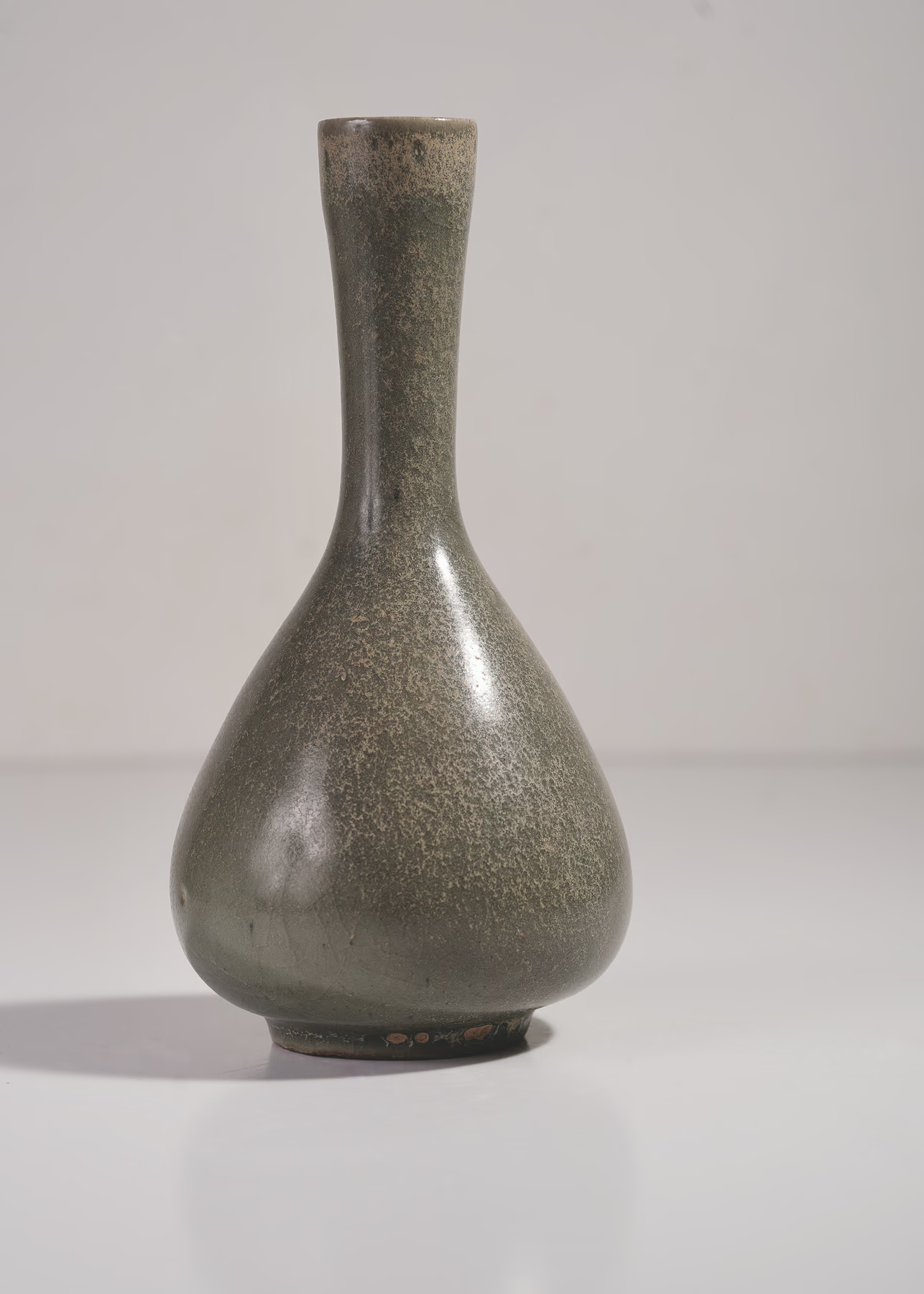
With its elegant swelling body and slender upright neck, this vase reflects the refined balance admired in Song-period ceramics.
The bean-green glaze, thinly applied and lightly crackled, reveals the grayish-red body beneath where it thins near the base.
Pooling of glaze at the foot creates deeper olive tones, enhancing the tactile surface.
Produced in the Linru kilns of Henan—closely linked to the Yaozhou tradition—such vessels translate the austere beauty of Ru-type celadons into wares of quiet grace for everyday use.
The subtle interplay of form, proportion, and glaze epitomizes the aesthetic restraint that defined Song artistry.
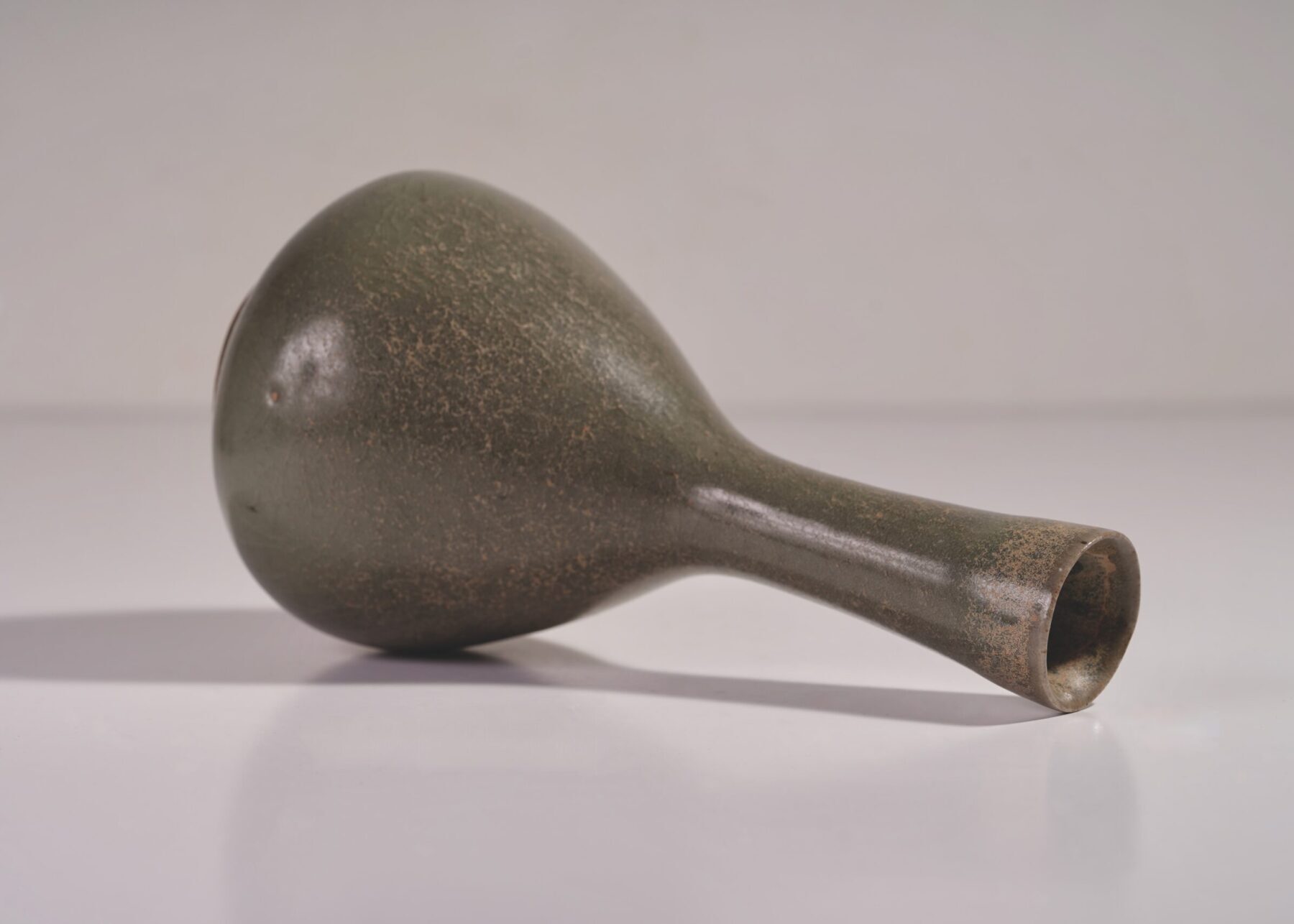
The vase presents a refined pear-shaped (yuhuchunping) form with a rounded body rising to a long, narrow neck and a slightly everted mouth rim.
The silhouette is fluid yet controlled, its gentle swelling and tapering creating a harmonious balance between body and neck.
The surface displays a soft, bean-green glaze with subtle mottling and a fine network of crackle.
The glaze pools toward the lower body, accentuating the curvature and lending depth to the color.
Glaze:
A translucent bean-green glaze with a thin, glassy texture covers the exterior.
The surface shows delicate crackle and scattered minute speckles, typical of Linru kiln firing under slightly reducing conditions.
The glaze thickens where it accumulates near the base, producing a deeper olive-green tone.
Body:
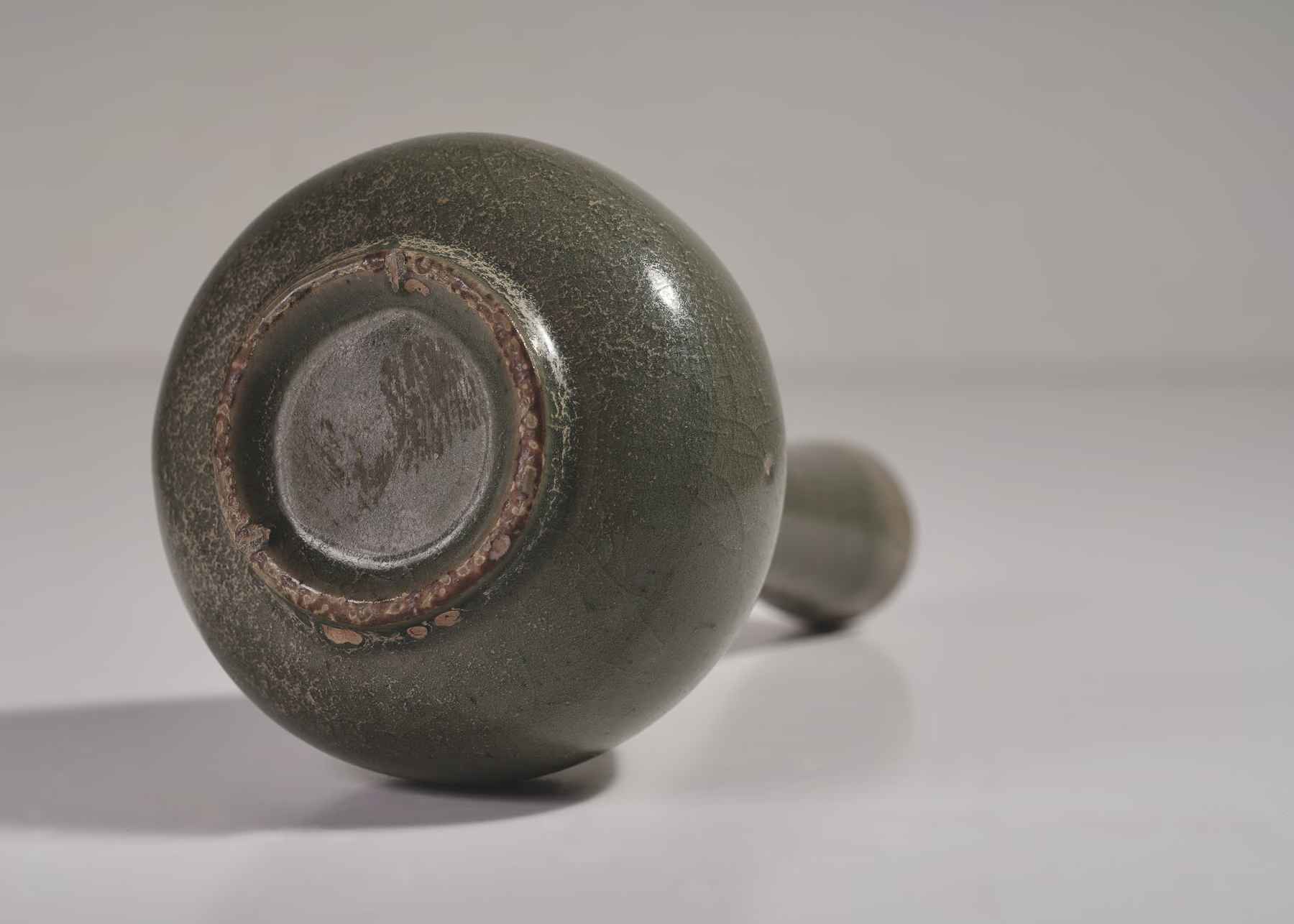
The clay body is grayish with a reddish hue where exposed.
It is moderately coarse, characteristic of Linru ware, which lacked the highly refined clay preparation of official Ru production.
Foot:
The foot ring is neatly trimmed and partially unglazed, revealing the warm reddish-gray body beneath.
Firing marks and traces of supports remain visible, indicating kiln stacking practices typical of folk kilns serving regional markets.
The yuhuchunping (“spring-in-the-jade-flask”) form, known for its graceful proportions, was a favored shape from the Northern Song onward.
While similar forms were used in court contexts for display or ritual pouring, Linru versions like this example were made for everyday use or as refined household vessels.
The controlled symmetry and luminous glaze express the Song aesthetic ideal of “restraint and harmony,” merging function and quiet beauty.
Comparable Linru celadons excavated from sites at Dayu and Yanhedian in Ruzhou (Henan) display identical glaze tones and clay texture.
Parallels may also be drawn with contemporaneous Yaozhou celadons, though Linru examples are distinguished by their paler, thinner glaze and slightly more rustic finish.
A similar pear-shaped vase with bean-green glaze is published in Henan Songdai Yaoshe Kaogu Baogao (Henan Institute of Archaeology, 2008), attributed to Linru ware.
The Palace Museum and Henan Provincial Museum collections likewise include Linru vessels showing the same glaze hue and reddish foot characteristic of this piece.
This vase exhibits all the core diagnostic features of Linru kiln ceramics: a thin bean-green glaze with glassy texture, a grayish-reddish stoneware body, and a neatly trimmed unglazed foot showing firing marks.
The Linru kilns, active from the early Northern Song through the Jin dynasty, were important centers of northern celadon production closely related to the Yaozhou tradition.
Their wares combined technical competence with a subdued elegance that echoes but does not imitate the sophistication of Ru official ware.
This piece thus represents the folk adaptation of the refined Ru aesthetic to the regional ceramic market of central Henan.
Northern Song–Jin dynasty (11th–13th century)
Linru Kiln (臨汝窯), Henan Province, China